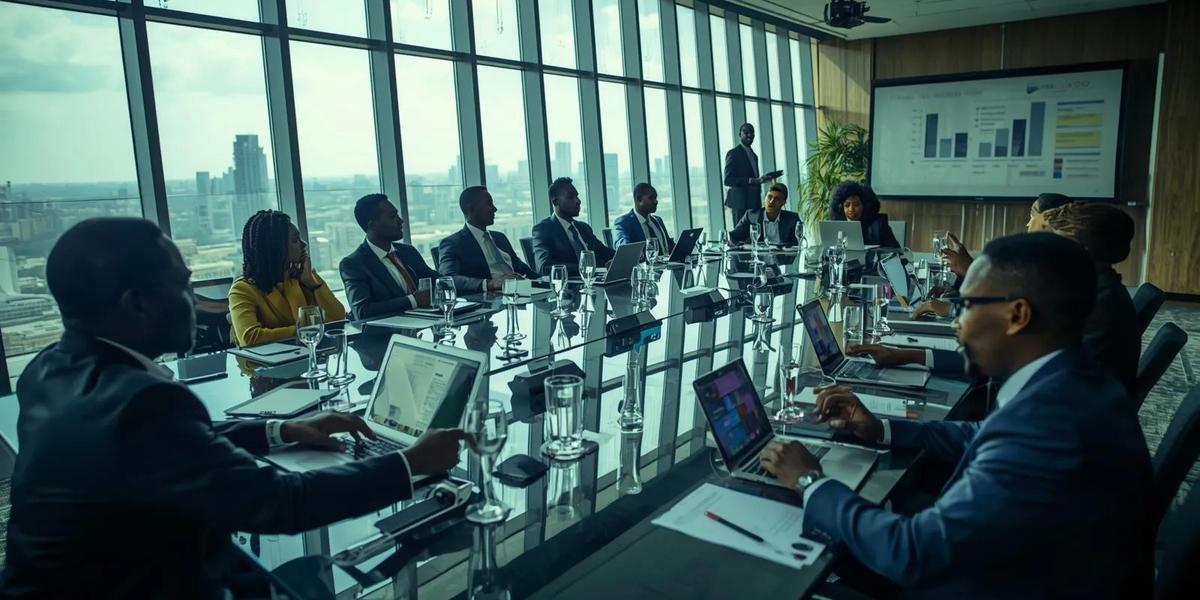
Choosing the right venue is crucial for successful conferences and corporate events. Nairobi offers diverse options to suit a wide range of requirements.
Top Conference Venues in Nairobi: Luxury Hotels
Villa Rosa Kempinski
State-of-the-art facilities with capacity for up to 800 delegates. Professional AV equipment and dedicated event team.
Radisson Blu Hotel
Modern conference facilities with flexible spaces. Excellent catering and strategic location near the airport.
Premier Conference Facilities in Nairobi
Kenyatta International Convention Centre (KICC)
Iconic venue in the heart of Nairobi. Multiple halls accommodating 50 to 4,000 delegates.
Safari Park Hotel
Extensive conference facilities set in 45 acres of landscaped gardens. Perfect for large-scale events.
Unique Conference Rooms & Outdoor Venues in Nairobi
Nairobi National Park Venues
Wildlife backdrop for memorable conferences. Several lodges offer meeting facilities.
Karen Blixen Coffee Garden
Historic setting with modern amenities. Ideal for smaller, intimate corporate gatherings.
Or Take It Out of the City
Nairobi is the obvious choice, and for a one-day conference with local delegates it is usually the right one. But for a programme running two days or more, particularly one where delegates are flying in anyway, moving the conference out of the city changes what people get out of it.
Delegates who stay in the city stay in work mode. The phone keeps ringing, the office is twenty minutes away, and someone always slips out for a meeting. Delegates who are two hours from Nairobi are present in a way they are not otherwise.
What that looks like in practice
A recent conference we ran followed this shape:
- Day one. Delegates arrive at JKIA and overnight in Nairobi. No programme, no expectations, just rest after the flight.
- Day two. Transfer to Naivasha in the morning, settle in during the afternoon, gala dinner that evening. The social part of the event happens before the working part, so delegates walk into the conference room already knowing each other.
- Day three. The conference itself. One focused day, no commute, no distractions.
- Day four. Game drive in the morning, transfer back to Nairobi in the afternoon, overnight in the city.
- Day five. Departures.
The sequencing matters more than it looks. Putting the gala before the conference rather than after it means the networking has already happened by the time the sessions start. Putting the game drive after the conference means delegates leave on a high rather than on a shuttle.
Where this works
Naivasha is the natural first choice from Nairobi: close enough for a comfortable morning transfer, far enough to feel like somewhere else, with lakeside venues that run conferences regularly. Nakuru works on the same logic with the national park as the excursion. For longer programmes or coastal preferences, Mombasa and Diani offer beachfront conference facilities, and Kisumu suits events with a western Kenya delegate base.
When this shape is worth building
Four nights and two long transfers around a single conference day is a deliberate structure, not an indulgent one. It suits the events where the outcome is the point: annual conferences that set direction for the year, leadership programmes where the relationships formed matter as much as the agenda, and delegations flying in from across the region who should arrive to something better than a hotel ballroom twenty minutes from the airport.
What you are buying is delegate attention, and it is the one thing a venue specification cannot deliver on its own.
If the brief is a single working session for people who will drive home afterwards, stay in the city. Everything else is worth the conversation.
Planning Around Nairobi
Choosing the venue is the easy part. What separates a conference that runs smoothly from one that does not is usually decided in the weeks before anyone arrives.
Build the schedule around traffic, not around the clock
Nairobi traffic does not negotiate. The working rule we give every client is simple: exact time is late, before time is punctual. If a session opens at nine, delegates need to be moving hours earlier, not minutes. For events where delegates are travelling from several hotels, that means staggered departures and a buffer that looks excessive on paper and turns out to be about right.
The cost of getting this wrong is not just a late start. It is a room of three hundred people watching an empty stage, and a programme that never quite recovers its rhythm.
Confirm the backup generator before you confirm anything else
A venue without reliable backup power is not a conference venue, whatever else it offers. This is the first thing we check and the one point we will not compromise on. Ask what the backup covers, how quickly it switches over, and whether it carries the AV load or only the lights. The answers vary more than you would expect.
Match the room to the room, not to the ego
A large hall with a small group in it is a harder environment to work in than most organisers realise. Sound travels badly, energy disperses, and delegates drift. Acoustics matter as much as capacity: forty people in a space built for four hundred will struggle to hear each other and struggle to stay engaged.
The right room is the one that fits the group, not the one that impresses on the site visit.
Put a coordinator in every breakout room
Concurrent sessions are where large conferences come apart. Delegates end up in the wrong room, a session starts without its facilitator, AV fails in one room while the technician is in another. For any event running multiple breakouts, we staff a coordinating attendant per room, on standby throughout. It is not an expensive addition and it removes an entire category of problem.
Brief the parking team in advance
Parking is rarely the venue's priority and almost always the delegate's first impression. Before the event, we speak directly to the security personnel managing the grounds, agree a parking layout that works with the space actually available, and brief them on delegate arrival patterns. Arriving to a confused gate and a full lot sets a tone that takes the whole morning to undo.
Walk the caterer through the menu and the numbers
Not email them. Walk them through it. The agreed menu, the confirmed numbers, the dietary requirements, the service timings. Catering at volume goes wrong in predictable ways, and almost all of them trace back to a caterer working from an assumption rather than a briefing.
Resist the decor
A conference room cluttered in the name of decoration is harder to move through, harder to hear in, and harder to photograph well. Spend the budget on the things delegates actually experience: sound, seating, sightlines, and food.
What We Handle Around the Venue
The venue supplies the room. Everything between a delegate landing at JKIA and sitting down in that room is ground logistics, and it is the part that determines how the event feels.
Arrival
We keep staff at the airport throughout the arrival window, not on call but physically present, directing delegates to vehicles held on standby for immediate transfer. For international delegations, a representative meets the group on the tarmac and walks them through immigration protocol. It removes the longest and most frustrating part of the journey at exactly the point where delegates are most tired.
Accommodation close to the venue
Delegates who spend an hour each way between hotel and conference hall arrive tired and leave early. Where we can, we block accommodation near the venue and plan transfers around the programme rather than around availability. It is a small decision at booking stage that shapes attendance on day three.
On the ground, during the event
Delegates are in an unfamiliar city and an unfamiliar building. An attentive attendant who knows where the breakout rooms are, when lunch opens, and where the prayer room is does more for the delegate experience than most of what appears on the agenda.
We also keep technical support on site. Laptops fail, adapters go missing, presentations do not open, batteries die ten minutes before a keynote. Having someone who can solve that in the room is the difference between a pause and a problem.
Recent Work
A few events we have handled, to give a sense of scale and scope:
International convention, Mombasa. Three hundred and fifty delegates, with an excursion programme alongside the main convention. We ran ground logistics for the full duration.
Educational AGM, Naivasha. One hundred and twenty delegates across three conference days and two excursion days. We were responsible for the whole engagement: accommodation, ground logistics, and eTA processing for arriving delegates.
Corporate conference, Kisumu. Seventy delegates. Full conference package and accommodation.
Let Come Travel Kenya help you find and book the perfect venue for your conference. We handle all logistics, from venue sourcing to day-of coordination.
Article Tags

Emily Wekulo.
Content Writer & StorytellerPart of the Come Travel Kenya team, passionate about sharing Kenya's beauty and culture with the world.
Found this helpful?
Share it with others