There is a version of Kenya that refuses to advertise itself. It does not sit on glossy billboards along highways. It does not dominate safari brochures. It does not flood social media feeds with curated perfection. Instead, it waits quietly — behind long roads, forgotten turns, and landscapes that most travelers pass without ever realizing what they are missing. And yet, this is the Kenya that stays with you.
Not because it is loud, but because it is real.
This journey is not about ticking famous boxes. It is about discovering a different country entirely — one where forests feel ancient, lakes feel mythical, deserts feel otherworldly, and villages carry stories that tourism has not yet rewritten.
Here are ten places that reveal Kenya afresh.
1. Kakamega Forest — What If Kenya Had a Lost Rainforest?
Walking into Kakamega Forest feels like crossing an invisible border into another continent altogether. The air changes first — becoming cooler, heavier, and filled with the scent of wet earth and living wood. Then the sound changes: traffic disappears, replaced by a layered symphony of birds, insects, and rustling leaves high above your head. Finally, the light changes, filtering through an endless canopy of trees that seem to have been growing long before human memory began recording time.
This is Kenya's only tropical rainforest, a surviving fragment of the ancient Guineo-Congolian forest system that once stretched across Africa. Every step along its winding trails feels like moving through a living museum — home to butterflies that shimmer like moving stained glass, monkeys that leap through the canopy with impossible grace, and bird species found nowhere else in the country.
Kakamega is hidden not because it is small, but because it is overshadowed. Most travelers rush westward toward Lake Victoria without realizing that one of Africa's oldest ecosystems lies quietly nearby, waiting for anyone willing to slow down.
2. Mfangano Island — Where Lake Victoria Keeps Its Secrets
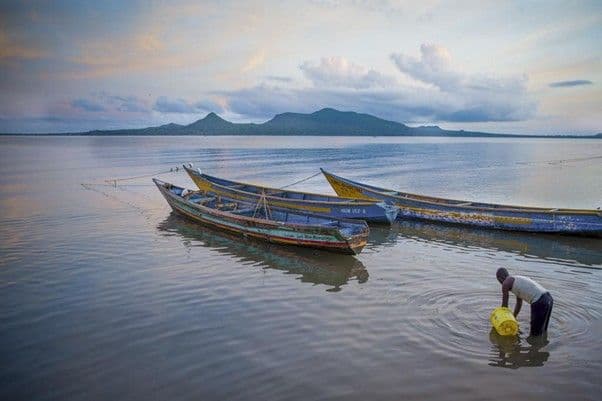
Mfangano Island does not announce itself — it emerges slowly from Lake Victoria like a memory forming on water. The boat ride alone feels like a transition into another rhythm of life. As mainland noise fades, the lake opens endlessly in every direction, broken only by fishing canoes and distant silhouettes of other islands.
When you finally step onto Mfangano, time behaves differently. There are no rushes here, no urgency in the air. Life moves with the lake — slow, deliberate, and deeply rooted in tradition. Hills rise gently from the shoreline, offering views so vast that the horizon seems to dissolve into water and sky.
But beneath this calm beauty lies something even older. Hidden among rocky outcrops are ancient rock paintings believed to have been created by early communities who once lived along the lake's shores. Standing before them, you are reminded that this island has witnessed centuries of human life, migration, and memory.
Mfangano remains hidden because it is not "packaged." It is not built for crowds. It is built for presence.
3. Chalbi Desert — Kenya's Forgotten Ocean of Sand
The first thing you notice in Chalbi is not what you see — but what you do not see.
No trees. No rivers. No familiar markers of direction. Just an endless stretch of salt flats and sand that swallow distance itself. The desert stretches across northern Kenya like an ancient ocean that has forgotten how to move.
Standing here, silence becomes physical. It presses against you. Even the wind feels distant, as if reluctant to disturb the emptiness. At certain times of day, heat creates illusions on the horizon — mirages that shimmer like water but vanish when approached.
Chalbi is hidden because it is difficult. It requires endurance, planning, and acceptance of harsh conditions. But for those who arrive, it offers something rare: the feeling of standing on another planet without ever leaving Earth.
4. Lake Chala — The Blue Eye of the Crater
Some places feel too perfect to be natural, and Lake Chala is one of them. Hidden along the Kenya–Tanzania border, this crater lake sits quietly inside a volcanic caldera, its waters shifting between deep turquoise and glowing sapphire depending on the light.
From the rim, the lake appears almost unreal — like a jewel placed deliberately inside a giant bowl of green cliffs. The descent toward the water is steep and quiet, accompanied only by birds and the rustle of wind through vegetation clinging to volcanic rock.
Lake Chala is hidden because it sits between borders, away from major tourist circuits. Yet those who reach it often describe it as one of the most peaceful places in East Africa.
5. Ngare Ndare Forest — Where Blue Water Meets Green Canopy
Ngare Ndare feels like nature decided to design a secret playground.
Suspended canopy bridges sway gently above dense forest, revealing treetops that stretch endlessly toward Mount Kenya. Beneath them, crystal-clear pools gather water that flows directly from the mountain, forming natural swimming spots so transparent that every stone on the riverbed is visible.
The forest is alive in layers — birds above, water below, and elephants occasionally passing through ancient corridors.
Ngare Ndare remains hidden because it sits in the shadow of Mount Kenya, one of Africa's most famous peaks. But for those who step inside, it often becomes the highlight of the entire region.
6. Takwa Ruins — The Coast That Time Forgot
Hidden within Lamu's coastal wilderness lies a place where history has been reclaimed by nature. Takwa Ruins are what remain of a once-thriving Swahili settlement, now partially swallowed by vegetation and silence.
Walking through the ruins, coral stone walls rise unexpectedly from the earth, forming outlines of homes, mosques, and pathways that once carried daily life. The air feels heavy with memory, as though the walls are still listening.
Takwa is hidden because it is overshadowed by Lamu Island's fame. Yet it offers something deeper than beaches or resorts — it offers time itself.
7. Kitum Cave (Mount Elgon) — Where Elephants Walk Underground
Inside Mount Elgon lies one of Africa's strangest natural wonders: a cave system where elephants enter to mine salt from the walls using their tusks.
Standing inside Kitum Cave is an experience that challenges logic. The darkness is thick, broken only by faint light at the entrance. The walls bear marks of centuries of elephant visits, a reminder that you are not the only visitor here.
It is hidden because of its remoteness and difficulty of access — but those who enter leave with a story that sounds almost unbelievable.
8. Ruma National Park — The Silent Savannah of the Roan Antelope
Ruma does not try to impress you — it simply exists in its own quiet perfection. Wide grasslands roll into distant escarpments, buffalo move slowly across open plains, and rare roan antelopes stand like living relics of a disappearing Africa.
The park is hidden because it sits far from mainstream safari circuits. But that distance is its greatest gift: solitude.
9. Samburu Singing Wells — Where Water Becomes Music
In the dry lands of Samburu, water is not just collected — it is sung into existence. Herders descend into deep wells, passing water upward in rhythm while chanting songs that coordinate movement and preserve tradition.
The sound is hypnotic. Human voices blending with the clatter of containers and the distant lowing of cattle.
This experience is hidden because it is not staged for tourism. It is life itself, continuing as it has for generations.
10. Marafa Depression (Hell's Kitchen) — Kenya's Burning Earth
Near Malindi lies a landscape so surreal it feels sculpted by fire. The Marafa Depression, often called Hell's Kitchen, is a canyon of sandstone ridges that glow red, orange, and gold as the sun moves across the sky.
Locals tell stories of ancient prosperity lost to tragedy, but geologically, it is erosion and time that shaped this dramatic terrain.
It is hidden because most visitors come for beaches — not realizing that just inland lies one of Kenya's most cinematic landscapes.
Rediscovering Kenya
Kenya is often described through its icons: lions, savannahs, beaches, and mountains. But beyond these familiar images lies a quieter country — one shaped by forgotten forests, hidden islands, ancient ruins, and landscapes that still feel untouched by time.
These ten places do not compete with the famous destinations. They complete them. Because they remind us that Kenya is not a single story told in loud voices, but a collection of whispers waiting for anyone willing to listen. And sometimes, the most unforgettable journeys are not the ones to the places everyone knows — but to the ones almost no one has bothered to sell.
Article Tags

Emily Wekulo.
Content Writer & StorytellerPart of the Come Travel Kenya team, passionate about sharing Kenya's beauty and culture with the world.
Found this helpful?
Share it with others